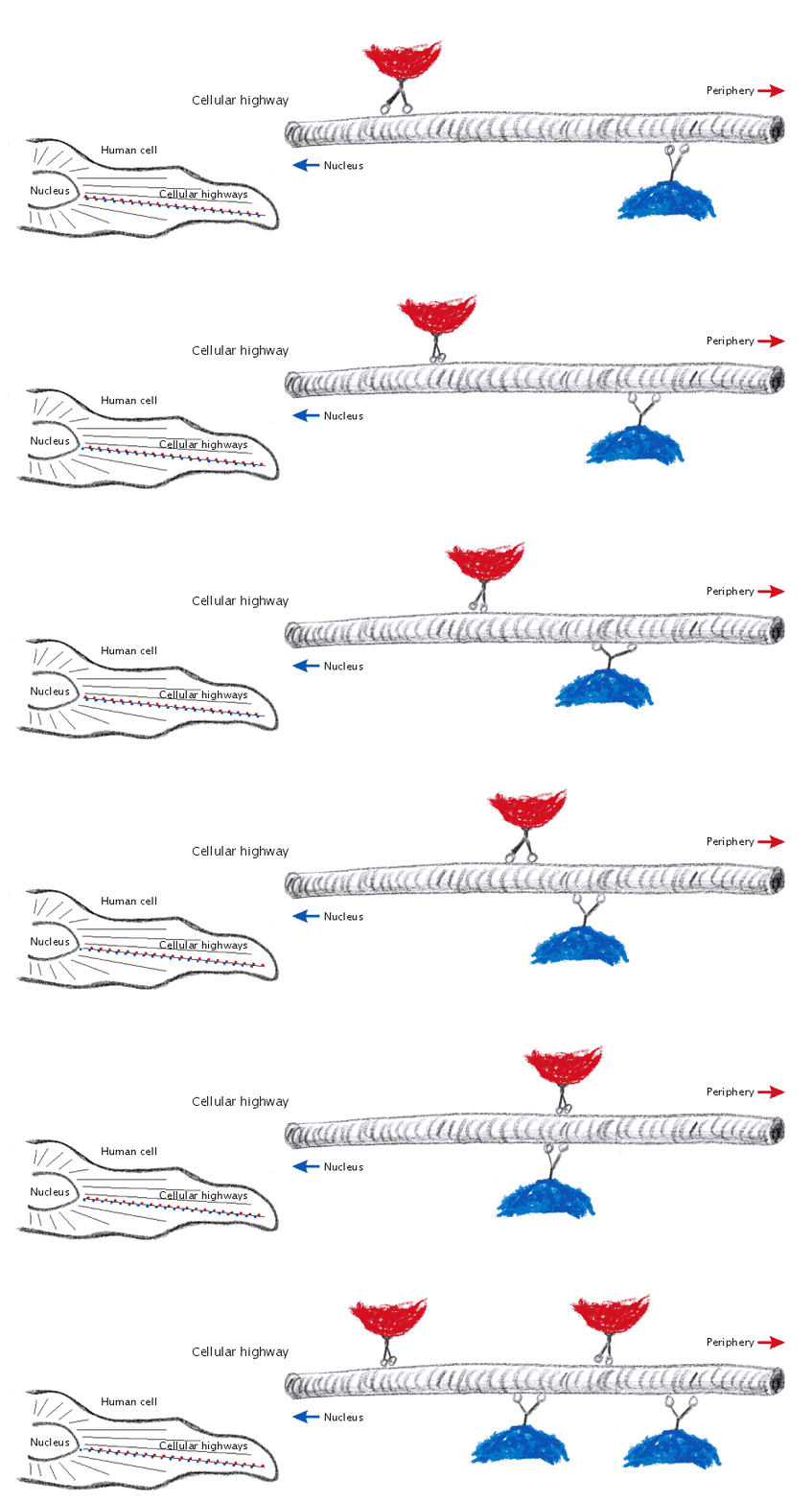
We know for some time, how the cellular transporters directed towards the periphery (kinesins, the ones carrying something red in the animation below) are walking their (microtubule) cellular highways. Now, thanks to two recent publications (DeWitt et al., Science 335, 221- 225 and Qiu et al., Nature Struct Mol Biol http://dx.doi.org/10.1038/nsmb) we start to learn, how the transporters directed towards the nucleus might walk. (The latter are called dyneins and are carrying something blue in the animation below.) As you can see, they seem to use a different gear. Information on this topic can also be obtained from a recent summary in the journal “Nature” (Walter and Diez, Nature 482, 44-45).

Walking the cellular highways
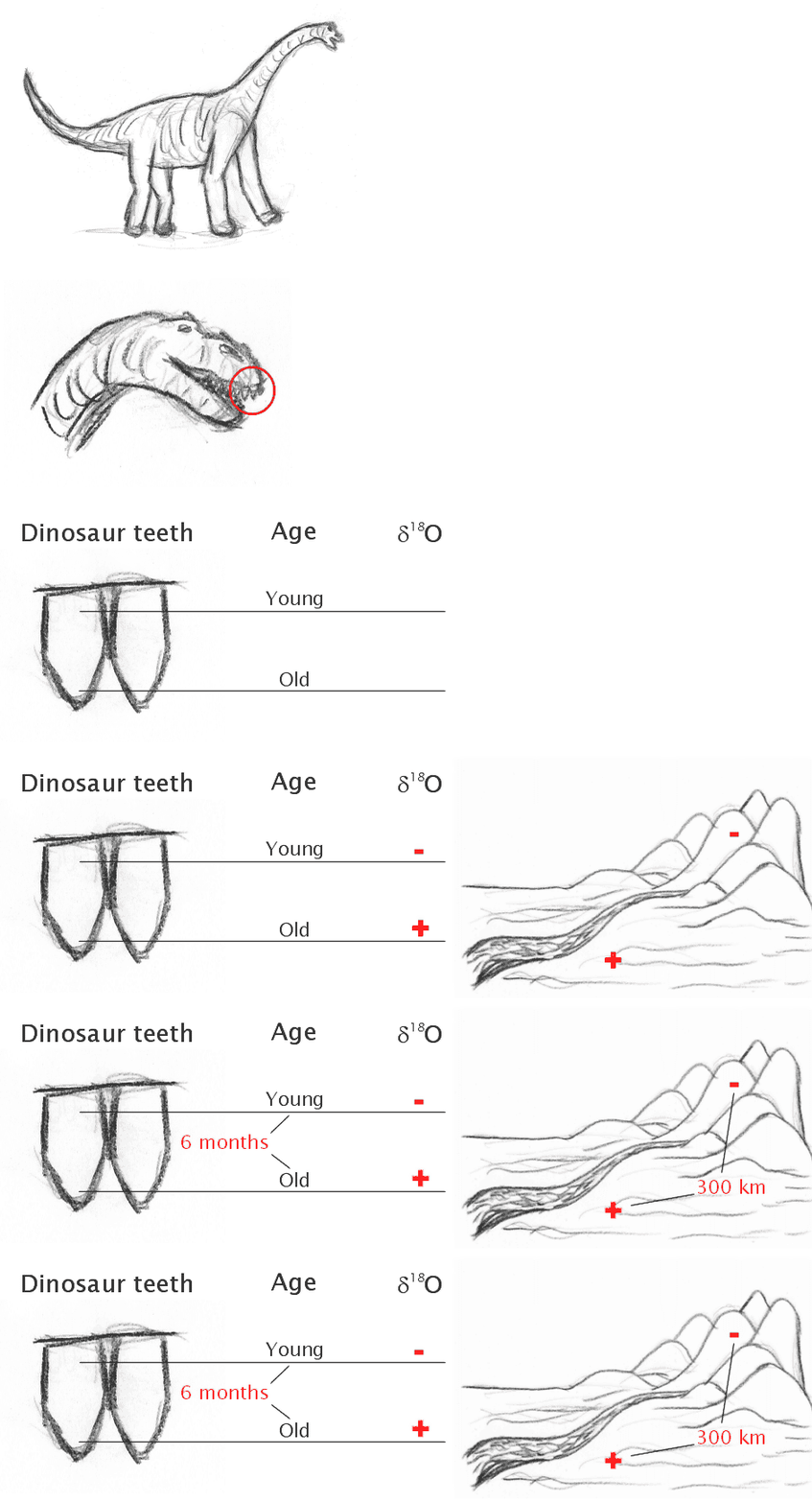
Plant-eating dinosaurs migrated over large distances, as demonstrated by oxygen isotope analyses of dinosaur teeth (Nature 480, 513 ff).

Dinosaur migration
Oxygen isotope analyses of teeth of the plant eating Camarasaurus have demonstrated that these plant-eating dinosaurs seasonally migrated several hundred kilometers between highland and lowland locations

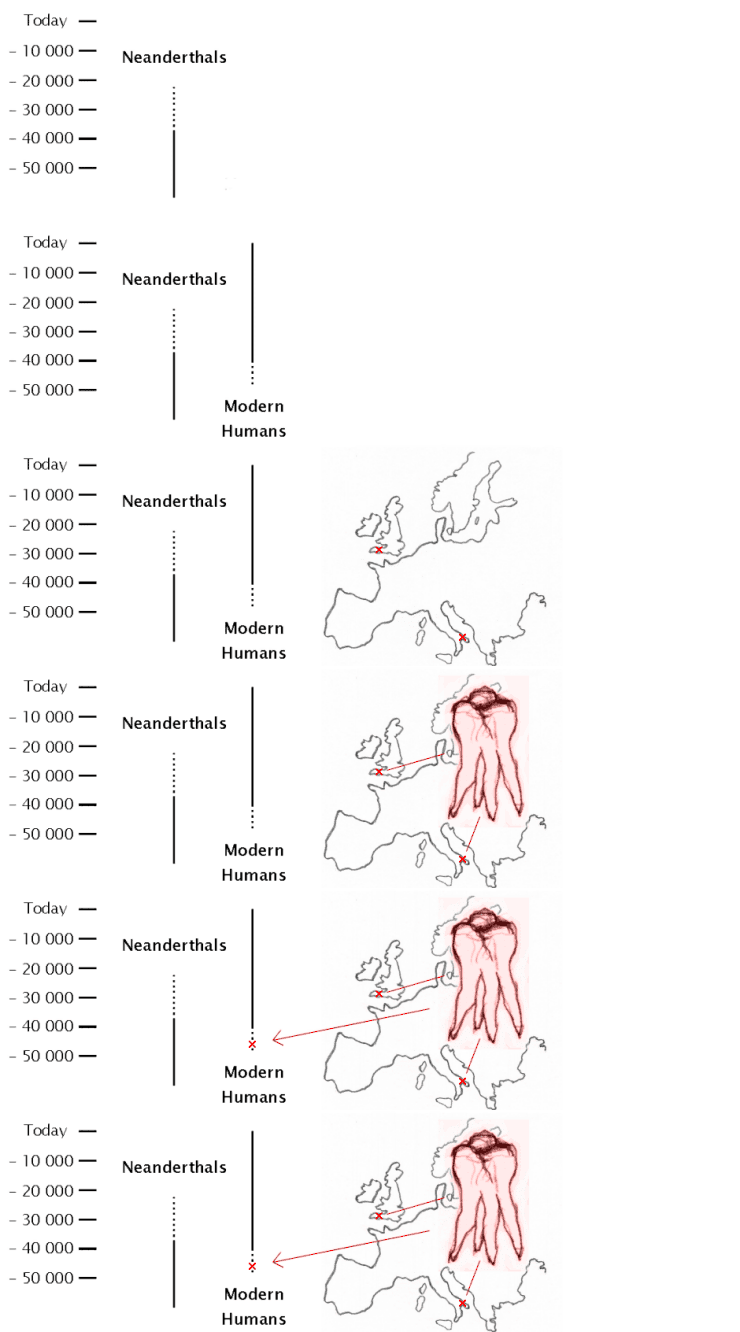
This week’s animation features three recent articles from Nature (volume 479, pages 483 – 485, pages 521 – 524, pages 525-529), which shifted the documented arrival time of modern humans in Europe by a few thousand years to an earlier time point. These findings have implications for the amount of time modern humans and neanderthals have spent together and for the cultural achievements of the neanderthals. Some of their assumed achievements seem to have been caused by modern humans instead.
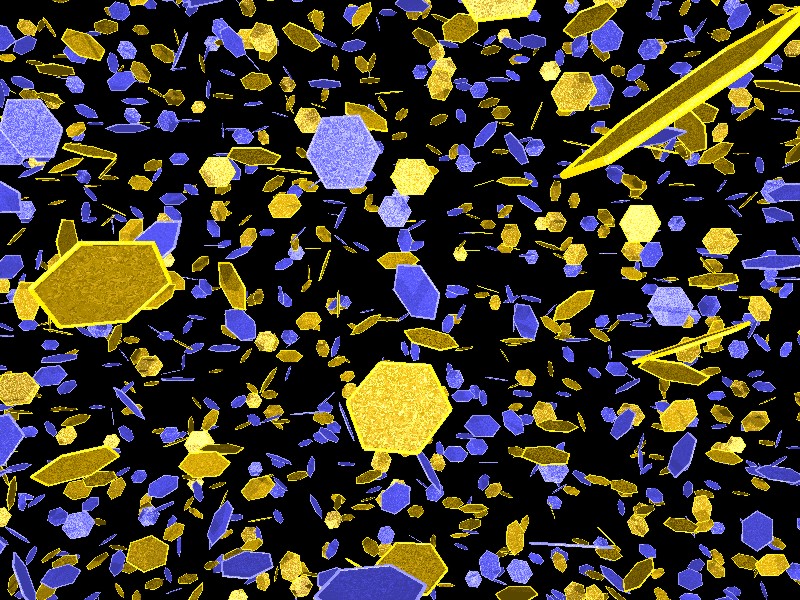
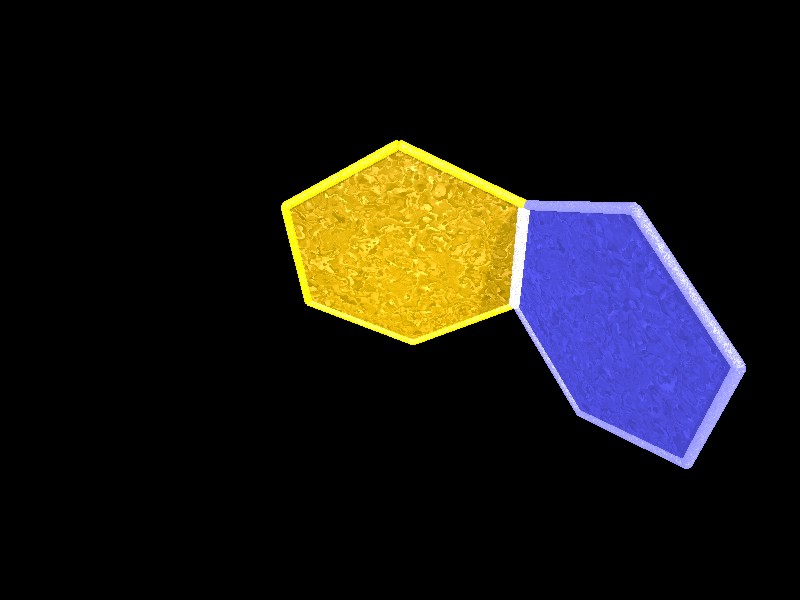
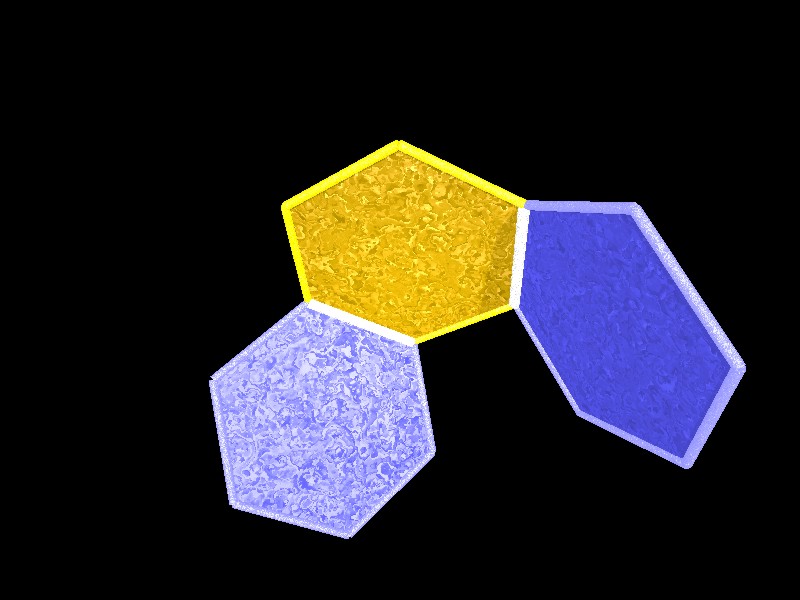
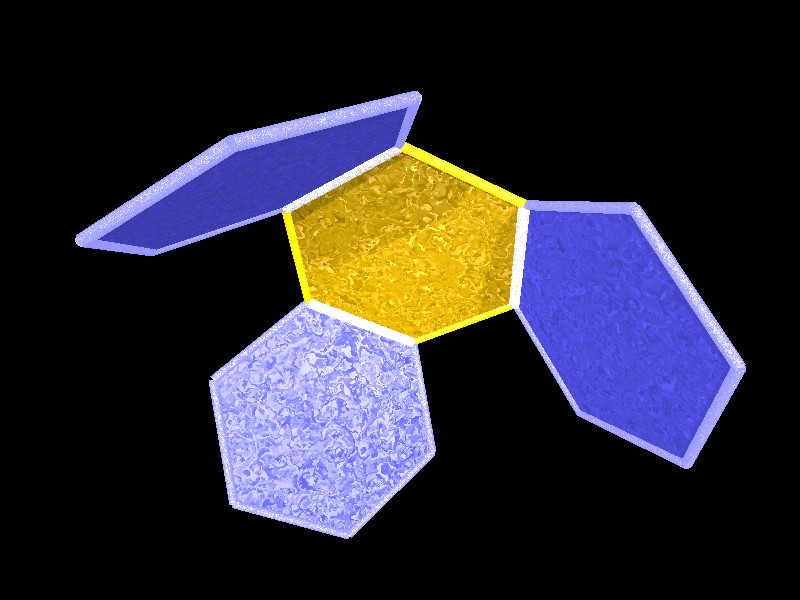
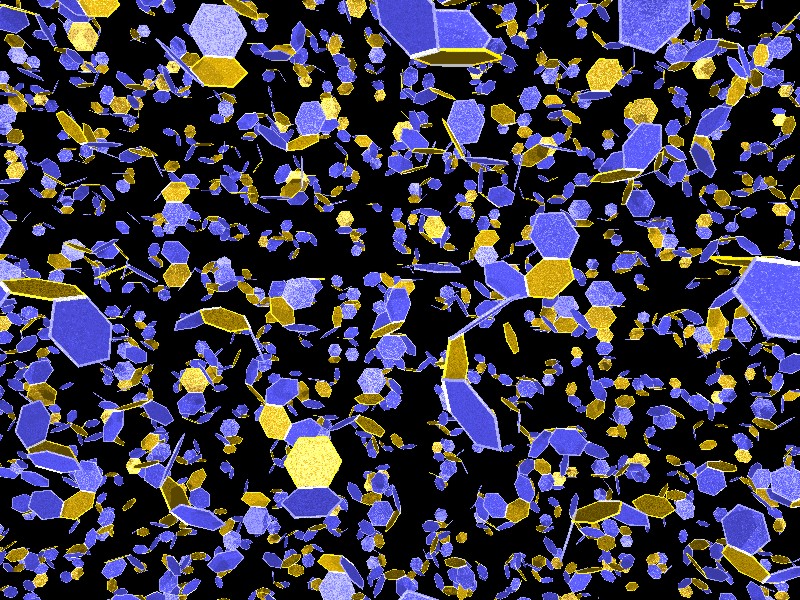
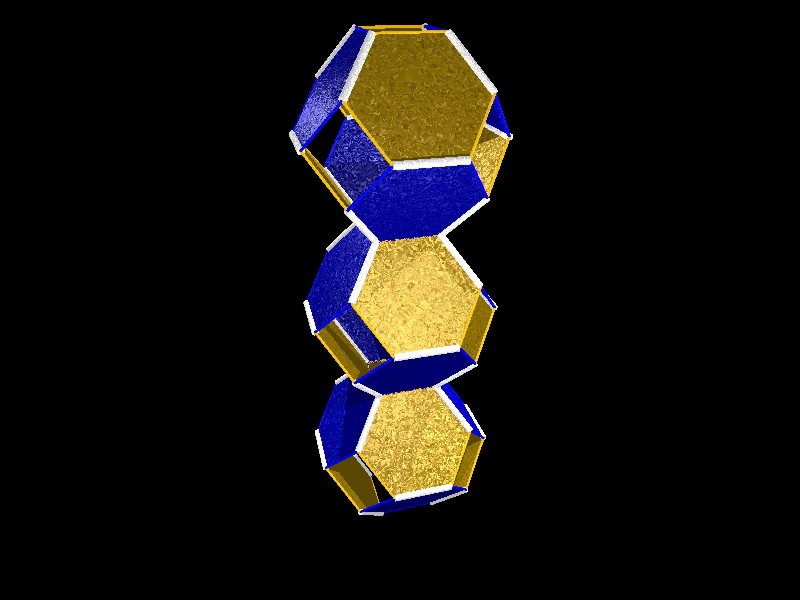
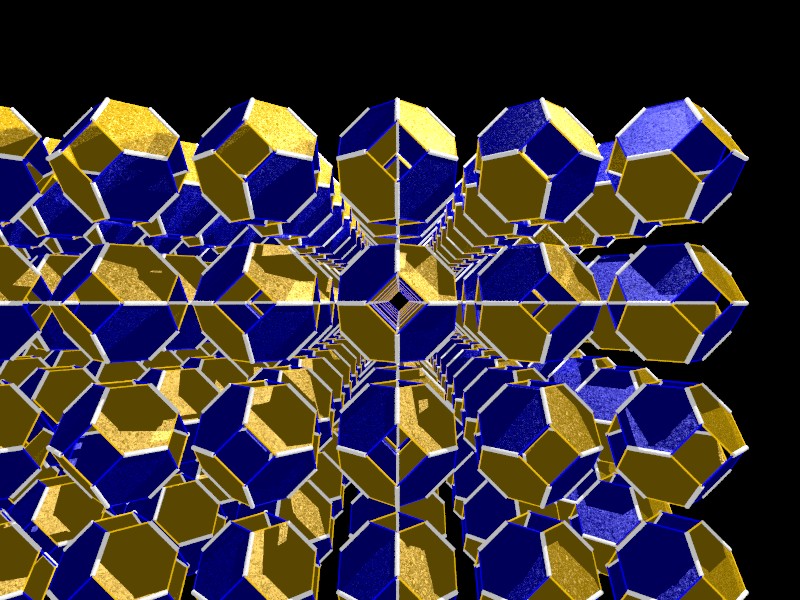
The molecular cages visualized below have been described by Liu et al in Science, volume 322, page 436. They refer to self-assembling ordered macromolecular structures and are formed from two different molecular building blocks (here depicted in yellow and blue colour), of planar, hexagonal geometry with similar size. (For chemical details please refer to the original publication.) Crucial for self-assembly is the ability of these building blocks to form hydrogen bonds with each other (i.e. in each case with the other building block) at their edges. So they have sticky edges specific for the other building block.

By forming such hydrogen bond connections (here depicted in white colour) the building blocks can assemble in an ordered way,…

Initial aggregation

Initial aggregation

Initial aggregation

Initial aggregation
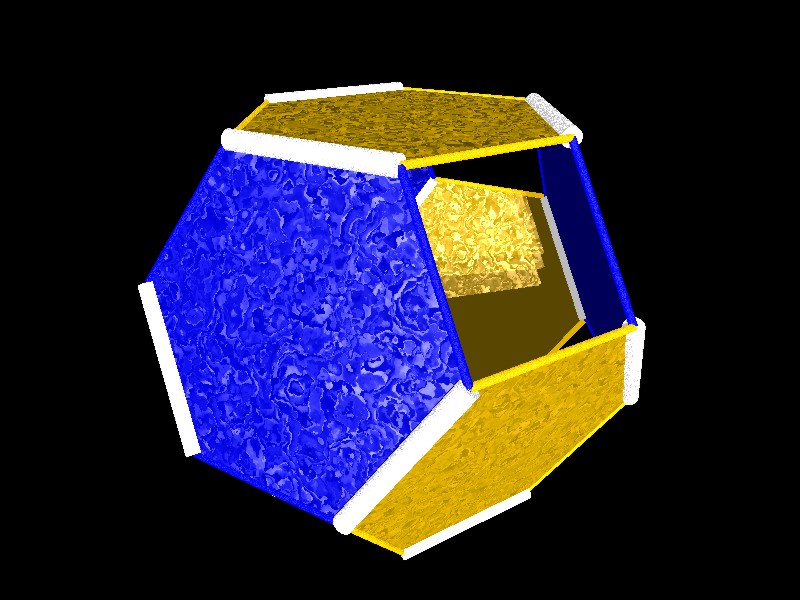
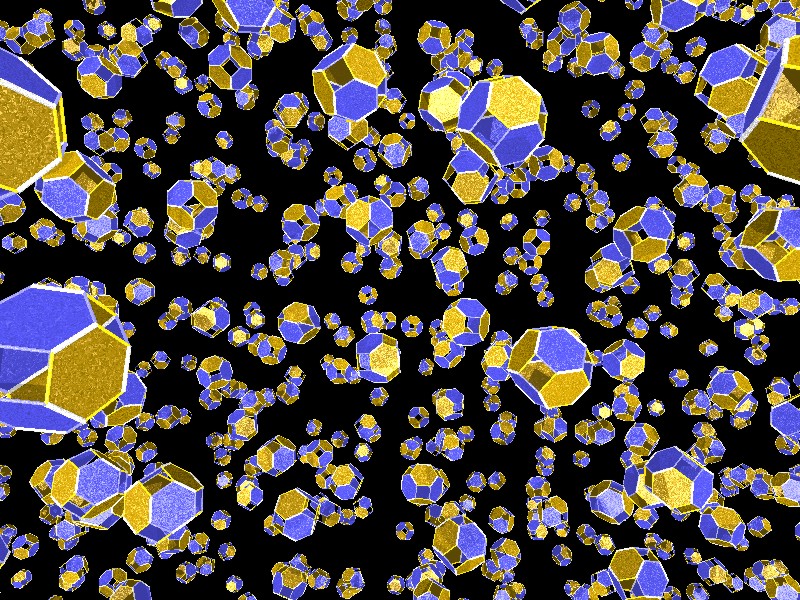
…finally forming a body similar to a truncated octahedron, one of the Archimedean polyhedra.


These bodies will finally form large, three-dimensional networks similar to the networks formed by zeolites. They can incorporate a large range of chemical species and may serve as some sort of nano-reaction tubes.


Framework
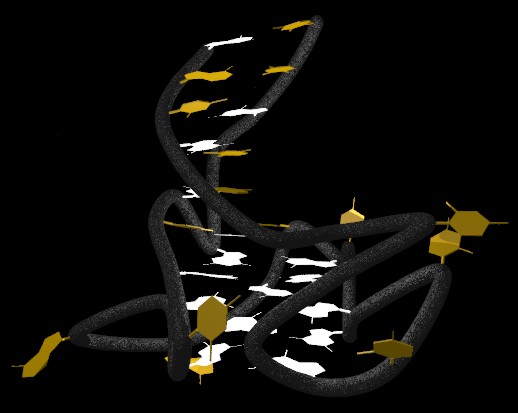
RNA-molecules form a variety of different structures and here is one of the more unusual ones: a quadruplex formed by the interaction of guanines form four different stretches of the molecule. (The importance of guanine residues for such a structure implies that it can only form in G-rich stretches of RNA-molecules.) In the example presented the quadruplex is preceded by a short stretch of an RNA double helix, as can be seen by the following lateral view of the structure. (The structure has been elucidated by Phan et al. in 2011 and has been published in Nature Structural & Molecular Biology (doi:10.1038/nsmb.2064)). In the lateral view, the double helix is given in the upper part of the structure, the quadruplex in the lower part. Guanines are given in white, all other bases in yellow color. The RNA backbone is given in black.

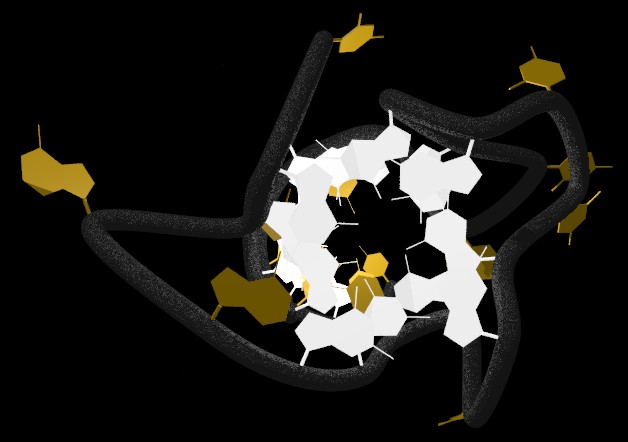
The symmetry of the quadruplex is better conceived by a perspective form below the structure as in the following image. The colors have been assigned in this image in the same way as before.

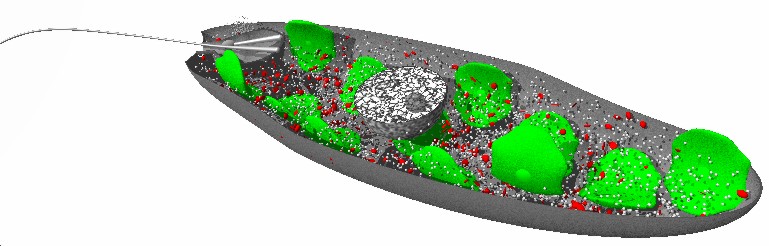
This posting is about the first eukaryotic organism in this series, Euglena gracilis. In the following model mitochondria are given in red, photosynthetic organelles in green. Both organelles most likely are derived from formerly independent organisms via endosymbiosis. The photosynthetic organelles are thought to be derived from former eukaryotic green algae (secondary endosymbiosis).

Euglena gracilis
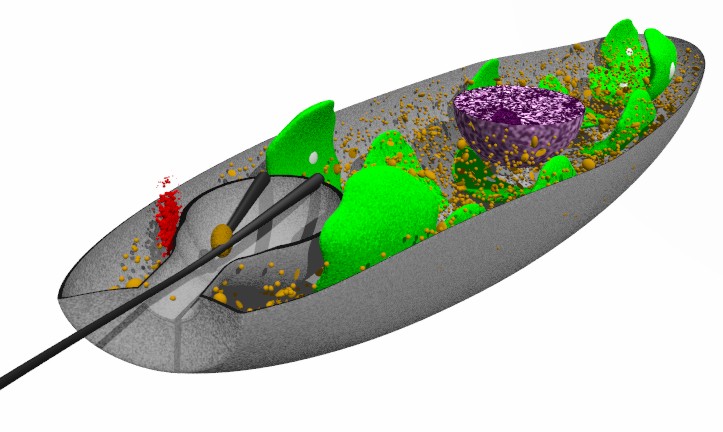
In the following picture the nucleus is given in purple, photosynthetic organelles in green, further organelles in brownish color and the eye spot in red.

Euglena gracilis
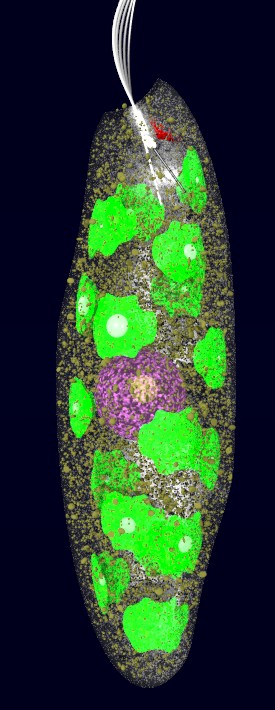
And here comes a model of Euglena gracilis as seen by dark field microscopy.

Euglena gracilis
Posted in Algae
|
Tagged Photosynthesis
|
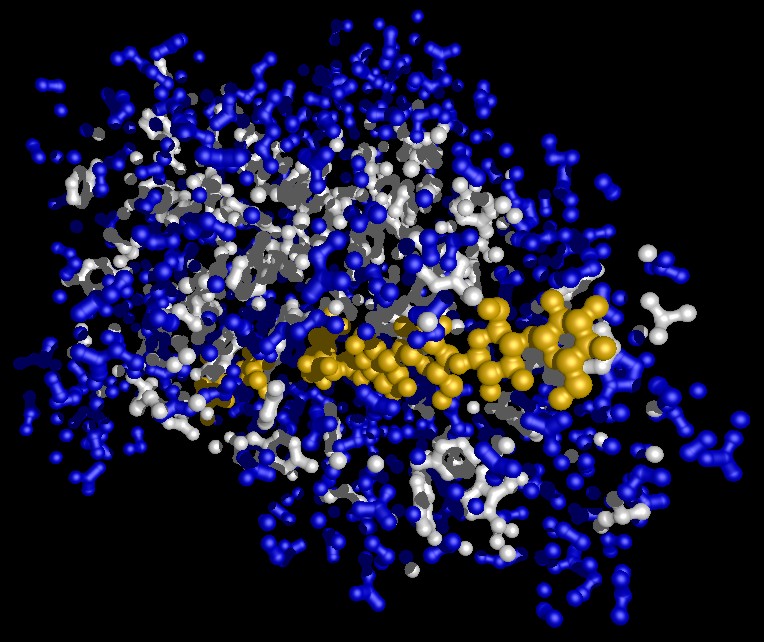
Proteins soluble in water in general contain hydrophobic amino acids in the internal, core regions and hydrophilic amino acids in their periphery where they can interact with water molecules. This phenomenon is visualized here using the cellulase introduced recently. In the following images only the side chains of amino acid are shown. Hydrophobic residues are given in white color, hydrophilic ones in blue. The artificial substrate cocrystallized with the cellulase is given in yellow.

Hydrophobic core
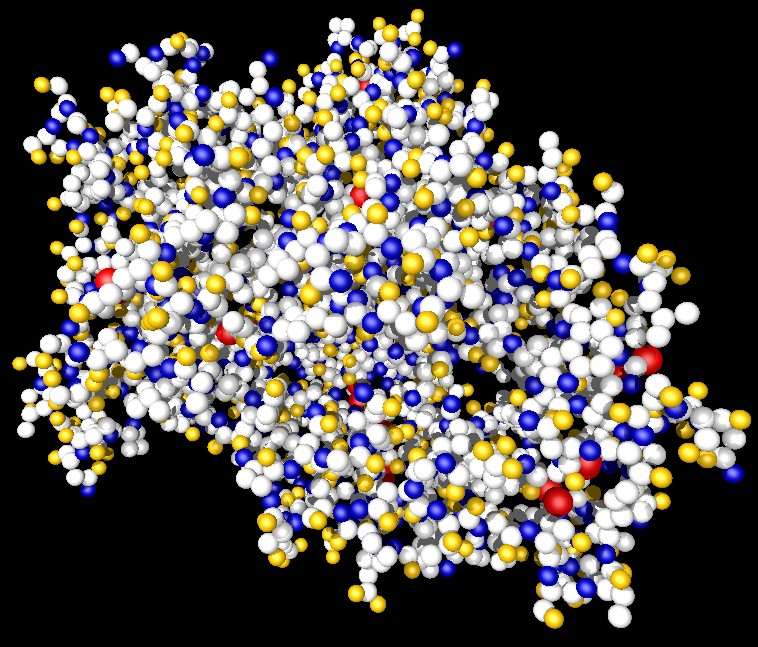
This post will focus on the substrate binding pocket of the cellulase introduced recently. First a simple structure of the protein with C (white), O (yellow), nitrogen (blue) and sulfur (red) atoms.

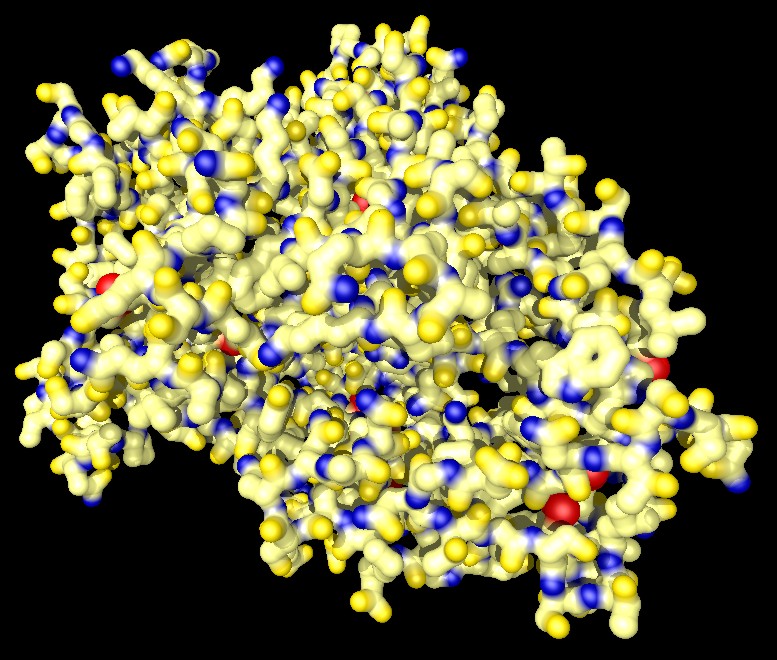
This structure is somewhat “diffuse” and becomes a bit clearer when shown as a blob with slightly yellowish C atoms.

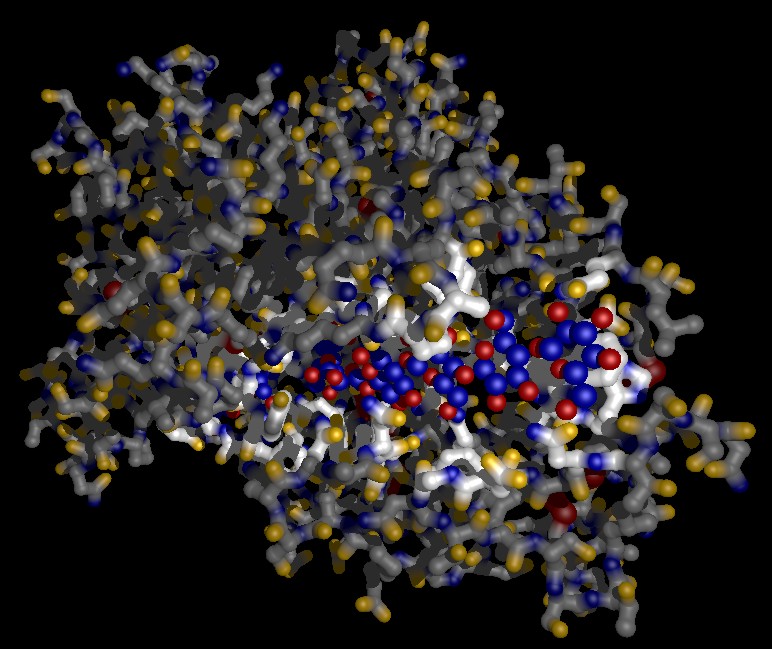
Since I want to focus on the substrate binding pocket, this region is highlighted in the following image and an artificial substrate is shown in blue (C) and red (O).

- Fungal cellulase with artificial substrate
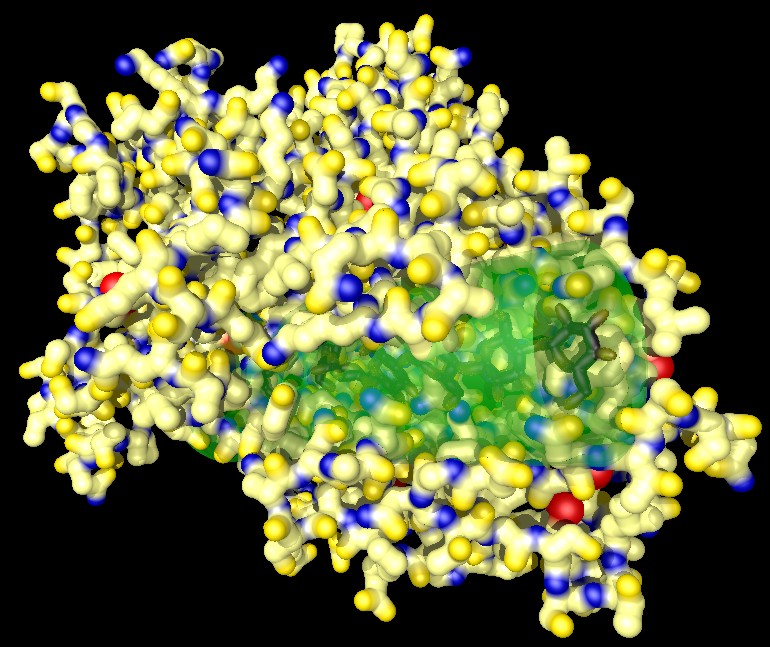
There are other ways to emphasize the pocket: Here a cylinder comprising the artificial substrate is marked in green colour.

Fungal cellulase with artificial substrate
And here only this very cylinder is given with the protein residues “substracted” and the artificial substrate given in white and yellow.

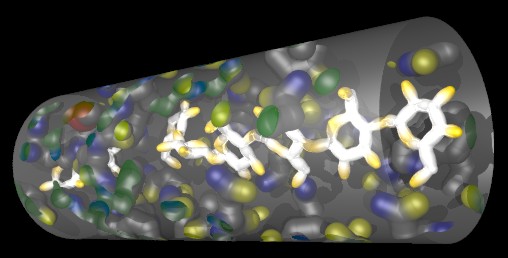
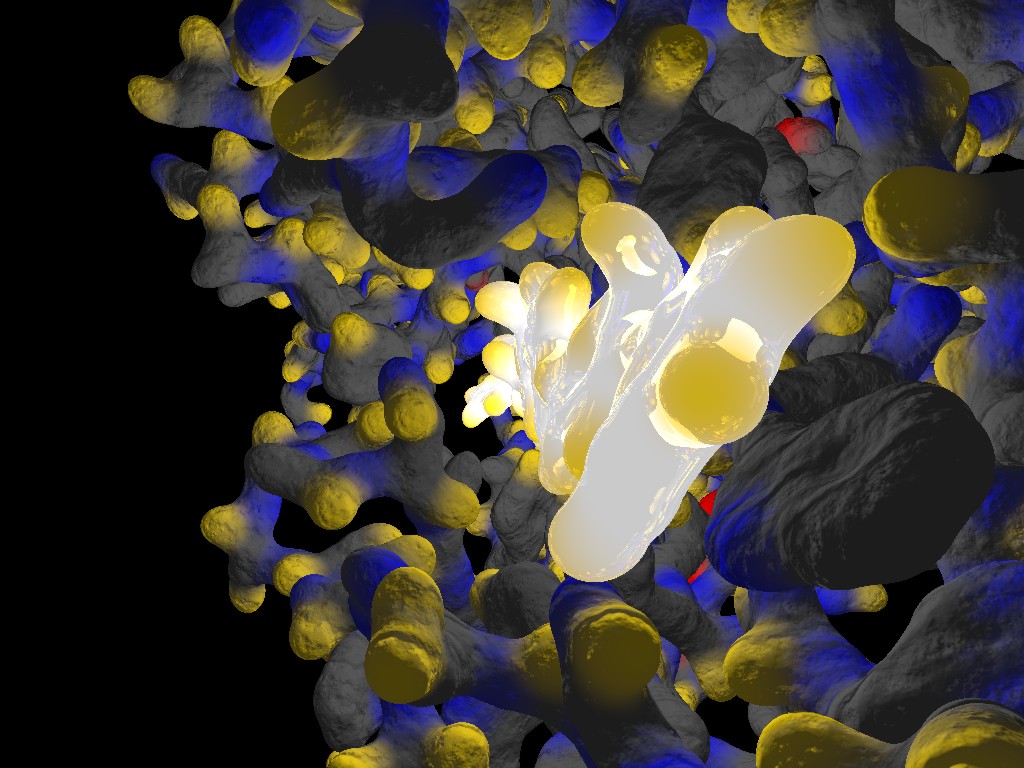
Finally the camera is moved towards the axis of the substrate binding pocket. The substrate is given in white and yellow; protein atoms are given as indicated above (C: grey, O: yellow, N: blue, S: red).

Substrate binding pocket
In the following postings I will explore some possibilities of the raytracing program Pov-ray to visualize protein structures. There are many other software solutions for such a purpose, of course… Raytracing, however, gives you a fair amount of flexibility. I won’t go too much into technical details here. (Basically the information necessary for Pov-Ray has to be extracted by some kind of additional program from the pdb-files storing the protein data. I am using PERL for this purpose, but there are certainly other solutions…) The protein I will use for visualizations is a fungal cellulase, described in 1997 by C.Divne, J.Stahlberg & T.A.Jones from Hypocrea jecorina. It has been cocrystallized with cellohexaose and cellobiose, which allows to take a closer look at the cellulose binding pocket of the enzyme.
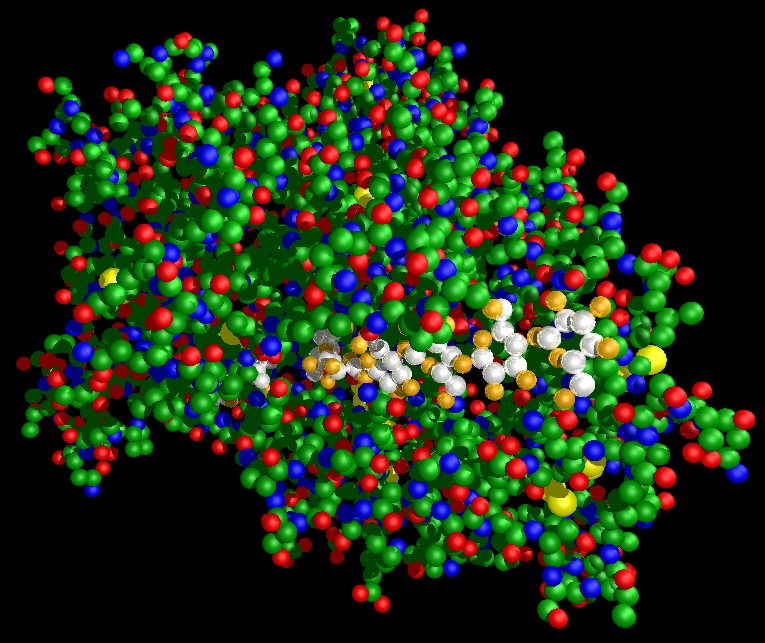
Here comes a first, rough picture with green representing C, blue representing N, red representing O and yellow representing S atoms in the protein structure. In the cocrystallized oligosaccharides white color represents C, yellow color O-atoms.
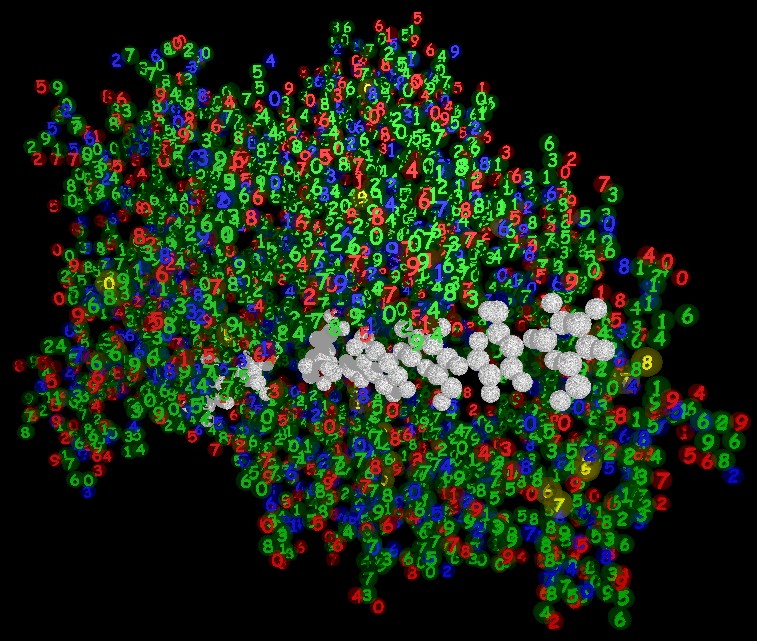
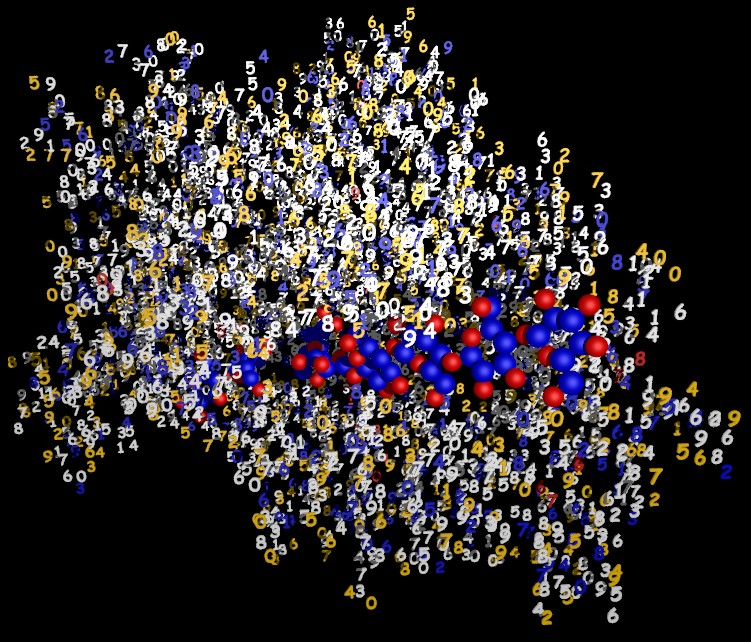
I thought, it might be a good idea to reflect about the way such structures are obtained. Actually proteins are not made of small balls of different colors, they rather consist exclusively of numbers. (Or what do you think is the result of the Fourier transformations the X-ray crystallographic data are subjected to?)
- The true nature of proteins
I was not very happy with the colors used in this image, therefore I played around a bit and ended like this:
- The true nature of proteins
I will work with this combination of colors in most of the following postings on proteins.